
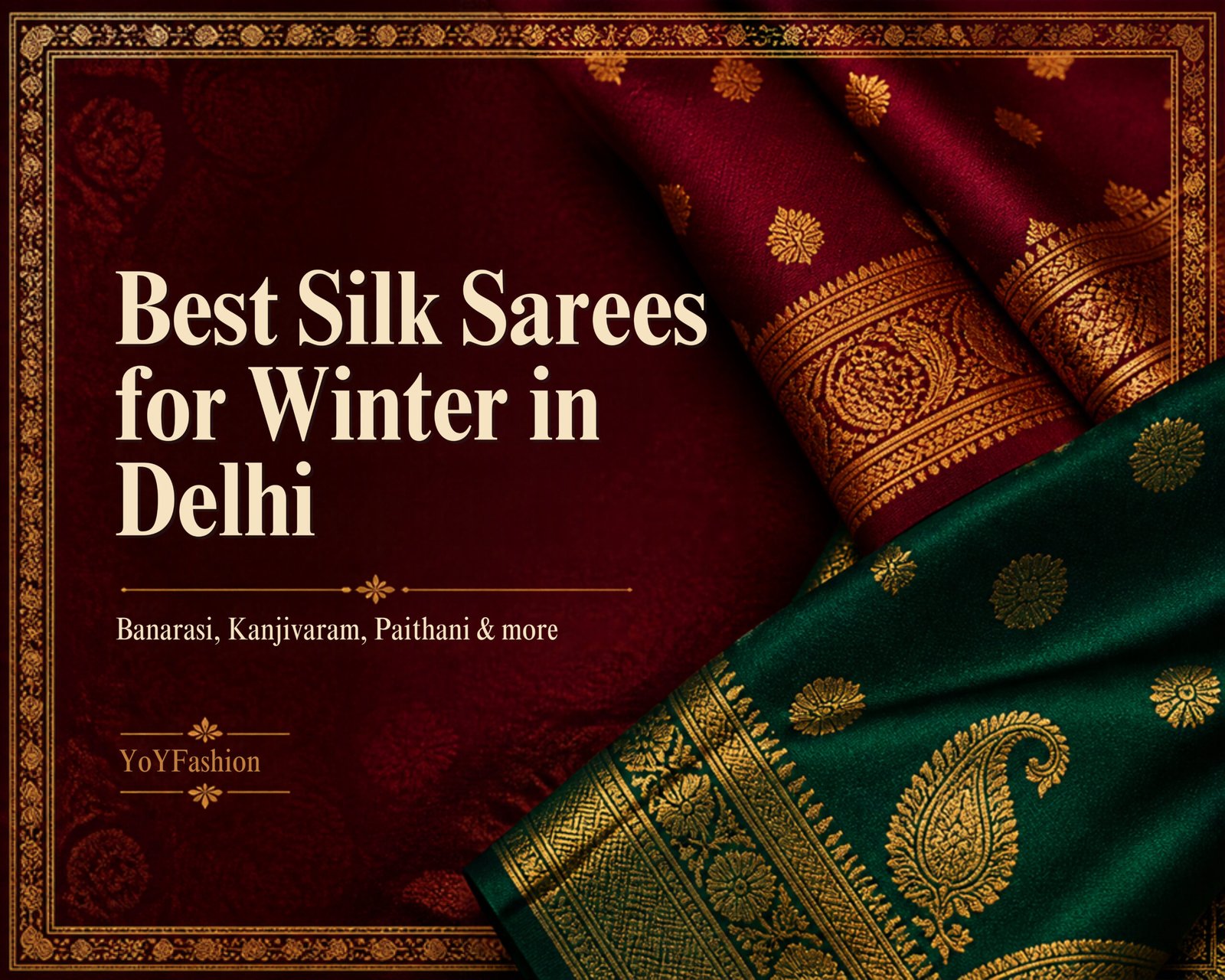
The best silk sarees for winter in Delhi are the heavier weaves: Banarasi katan, Kanjivaram, Paithani and textured Tussar. Their dense construction and zari work feel warmer and hold their drape better than featherlight silks, and they layer cleanly with velvet blouses, shawls and capes. Delhi’s winter nights commonly fall into single digits (°C) in December and January, and the November to February wedding season keeps silk in demand, so the real question is not whether to wear silk but how to build the outfit around it.
Why Silk Works for Delhi Winters (and Where It Falls Short)
Silk works in Delhi winters because it is a natural fibre that sits close to the body without trapping moisture, and the heavier weaves add enough fabric weight to take the edge off a cool afternoon. What silk does not do is insulate on its own, so a silk saree for a Delhi evening needs layers underneath and on top.
Delhi’s cold is dry and sharp, with fog in the mornings and a steep drop after sunset. A saree that looks perfect at a 2 pm wedding lunch can feel thin by the time the baraat arrives at night. The picks below are chosen for weight, texture and how well each one takes layering, not just for looks.
The 6 Best Silk Sarees for Winter in Delhi
1. Banarasi Katan Silk: The Winter Wedding Standard
Banarasi katan silk is the strongest all-round choice for a Delhi winter because it is woven from twisted silk yarn into a firm, substantial fabric with zari motifs worked into the weave itself. The fabric has body, so it falls in clean pleats and stays put under a shawl. Banarasi brocades and sarees carry a Geographical Indication (GI) tag for Varanasi and its adjoining districts. If you want to understand what you are paying for, our guide to how Banarasi silk sarees are woven in Varanasi explains the loom process and why a handwoven piece takes weeks to months.
Best for: weddings, sangeet nights, festive dinners. Pair with: a velvet or brocade full-sleeve blouse and a pashmina.
2. Kanjivaram (Kanchipuram) Silk: Heirloom Weight
Kanjivaram silk is a heavy mulberry silk saree from Tamil Nadu, traditionally woven with contrast borders and rich zari, and its weight makes it one of the warmest silk options you can wear. The strong colour contrast between body and border photographs well in Delhi’s low winter light. Because it is heavy, drape it with fewer, neater pleats and choose a lighter shawl so the combined weight does not feel bulky.
Best for: bridal and family functions, evening ceremonies. Pair with: a high-neck or boat-neck blouse with three-quarter or full sleeves.
3. Paithani Silk: Colour and Peacock Motifs
Paithani is a Maharashtrian silk saree known for its bright colour combinations, a woven zari border and pallu, and motifs such as the peacock and lotus. It is a good pick when you want something that looks distinctive in a room full of Banarasis. The fabric is substantial enough for winter, and the saturated shades suit the season’s jewel-tone palette.
Best for: weddings and festive occasions where you want to stand out. Pair with: a contrast blouse in a solid velvet.
4. Tussar (Tasar) Silk: The Daytime Winter Option
Tussar silk is a wild silk with a naturally textured, matte surface and a warm, earthy colour range, which makes it well suited to daytime winter events in Delhi. It is less formal than katan or Kanjivaram, so it works for office functions, afternoon gatherings and cultural events. The slightly coarse texture gives it a dry-hand grip that stays in place under a cape or jacket.
Best for: day events, festive office wear, art and handloom exhibitions. Pair with: a structured blazer-style jacket or a wool shawl.
5. Mysore Crepe Silk: Light, Soft and Easy to Layer
Mysore silk, usually woven as a soft crepe, is the lighter option on this list and is best when you plan to layer heavily rather than rely on fabric weight for warmth. It drapes smoothly and travels well, which makes it practical for a day that moves from a sunny afternoon to a cold evening. Treat it as a base layer for a long cardigan, coat or cape rather than a standalone winter statement.
Best for: office, day functions, travel. Pair with: a long wool coat or cape. For styling ideas on the outer layer, see our piece on the evolution of wool coats in modern fashion.
6. Bandhani on Gajji Silk: Festive and Lightweight
Bandhani sarees on gajji silk bring the tie-dye dot patterns of Gujarat and Rajasthan to a silk base, giving a festive look at a lighter weight than katan or Kanjivaram. They suit informal celebrations and family get-togethers, and the red, maroon and mustard shades read warm in winter. To learn how the dots are made and why the craft is so labour-intensive, read Bandhani Decoded.
Best for: festive lunches, small family events. Pair with: a knit shrug or a fine wool wrap.
Quick Comparison: Which Silk Saree Suits Which Delhi Winter Occasion?
| Saree | Weight and feel | Best occasion | Layering ease |
|---|---|---|---|
| Banarasi katan | Medium to heavy, firm drape | Weddings, sangeet, festive dinners | High |
| Kanjivaram | Heavy, rich zari | Bridal and family ceremonies | Medium (choose a lighter shawl) |
| Paithani | Medium to heavy | Weddings, festive occasions | High |
| Tussar | Medium, textured and matte | Day events, office functions | High |
| Mysore crepe silk | Light, soft drape | Office, day functions, travel | Needs heavier outer layers |
| Bandhani on gajji silk | Light to medium | Family and festive lunches | Medium |
How to Layer a Silk Saree in a Delhi Winter
Layer a silk saree in winter by changing the blouse, adding a structured outer piece and choosing closed footwear, rather than adding bulk under the saree itself.
- Blouse: choose full or three-quarter sleeves in velvet, brocade or raw silk. A high or boat neckline keeps the chest and shoulders covered.
- Inner layer: a thin thermal or microfibre inner under the blouse adds warmth without showing at the neckline or sleeves.
- Outer layer: a pashmina or a Kani-style shawl suits traditional looks, while a cape, a short jacket or a blazer gives a more contemporary line. Our guide to why knitwear never goes out of style during winter covers cardigans and shrugs that pair well.
- Footwear: closed juttis, block-heel pumps or low boots with socks are more practical than open sandals on a cold night.
- Draping: pin the pallu over the shoulder so a shawl does not drag it down, and keep pleats neat and few on heavier weaves.
Best Colours for Winter Silk Sarees
Deep jewel tones such as emerald, bottle green, maroon, wine, royal blue and mustard are the strongest winter colours for silk sarees because they look rich in cool, low light and pair easily with gold zari. Pastels and very light shades are not wrong, but they tend to look washed out against Delhi’s winter haze, so reserve them for bright afternoon events. For more seasonal outfit ideas, browse our Winter Styling section.
Where to Shop for Silk Sarees in Delhi
Delhi’s long-established saree markets, including Chandni Chowk, Karol Bagh and Lajpat Nagar, stock a wide range of silk sarees, and government-backed emporiums and handloom fairs are good places to buy directly from weaver clusters. Dilli Haat INA hosts craft and handloom stalls through the year, and the Central Cottage Industries Emporium on Janpath and the state emporiums are reliable starting points for GI-tagged weaves. The Surajkund Crafts Mela, usually held in February near Delhi, is another place to see weavers from across India. Confirm dates and stall lists before you travel, as these change from year to year.
How to Check That a Silk Saree Is Genuine
Look for the Silk Mark label (issued under the Central Silk Board’s Silk Mark Organisation of India), a GI tag where the weave is GI-protected, and the Handloom Mark for handwoven pieces, then ask the seller to name the silk type, the weave and the region of origin. A seller who cannot answer those three questions is a warning sign. Note that a label supports a claim but does not replace a proper bill with the fabric and weave described on it.
Caring for Silk Sarees in Winter
Store silk sarees folded in breathable muslin or cotton, away from direct sunlight and damp, and dry-clean them rather than washing at home.
- Air each saree for a few hours in shade after wearing it before folding it away.
- Refold along different lines every few months so creases do not set and weaken the zari.
- Keep perfume and hairspray off the fabric, and apply them before you drape.
- Avoid plastic covers for long-term storage, as they trap moisture.
Frequently Asked Questions
Which silk saree is warmest for winter in Delhi?
Heavy weaves such as Kanjivaram and Banarasi katan feel warmest because of their fabric weight and dense zari work. Layering with a thermal inner, a velvet blouse and a shawl makes a bigger difference to warmth than the saree alone.
Can you wear a silk saree to a Delhi winter wedding at night?
Yes. Choose a heavier silk in a jewel tone, wear a full-sleeve blouse, carry a pashmina or wear a cape, and pick closed footwear. Evenings are much colder than afternoons, so plan the outer layer first.
What is the best blouse fabric for a winter silk saree?
Velvet, brocade and raw silk blouses with full or three-quarter sleeves work best because they add warmth and structure. A thin thermal inner can go underneath.
Is Tussar silk good for winter?
Tussar works well for daytime winter events because of its textured, matte finish and earthy colour range. For a cold evening, add a jacket, cape or wool shawl.
How do I know if a silk saree is pure?
Check for the Silk Mark label, a GI tag on GI-protected weaves and the Handloom Mark on handwoven pieces, and ask the seller to specify the silk type, weave and region. Buy with a proper bill.
The Bottom Line
For a Delhi winter, start with Banarasi katan if you can only buy one silk saree, add Kanjivaram or Paithani for weddings, and use Tussar or Mysore crepe silk for the day. Whichever you choose, the layers around the saree decide whether you are comfortable at 9 pm, so plan the blouse, shawl and footwear before you plan the saree.